You can now request a DNO acceptance letter online.
You should use this form if you already have solar panels installed, and:
It’s a letter produced by National Grid that confirms your solar installation was correctly reported to us by your solar installer, and that we have approved the installed equipment to export electricity back to the grid. This letter is produced automatically once an application is fully completed, and is sent to your solar installer, who should then pass this on to the property owner along with any other paperwork.
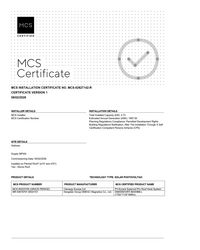
The Microgeneration Certification Scheme, most commonly known as MCS, is a certification scheme that ensures both the products used in microgeneration, and the companies and technicians that install them have been quality assured and follow industry best practices. National Grid is not directly involved in the MCS scheme, but we do ask for a copy of the certificate as it often holds useful information.
Below are examples of what an old-style and new-style MCS certificate look like.
![]()
![]()
G98 / G99 refers to the two most common types of solar installation, G98 for those 3.68 kW and below, and G99 for anything larger. Your supplier may mistakenly ask you for ‘your G98 or G99’ as this is commonly confused, what they actually require from you is a DNO Acceptance Letter that confirms the G98 / G99 application has taken place and was accepted.
A Meter Point Administration Number, also sometimes called a Supply Number, is a 13 digit reference used as a unique identifier for individual electricity supplies. Although the name suggests it is linked to the meter, an MPAN might have several meters connected to it. Your MPAN number can most easily be found on your energy bill, but it should also be on the physical supply itself.
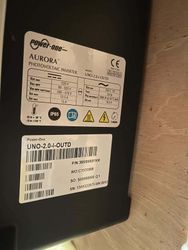
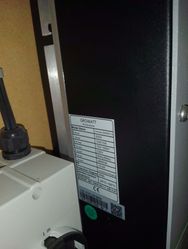
An inverter is a device that all your solar panels and batteries connect into, usually mounted in the loft or garage of the property, and will have a sticker or plate on the side that shows the make, model and rating information of the device.
The MCS often doesn’t include all the required information we need to know about your inverter, this would normally have been supplied by the installer before your solar was installed, but in some cases this information was missed or not provided correctly. We ask for photos just so we can confirm exactly what model inverter is currently installed, so we can update our records to match.
Some examples of suitable photos are below:
![]()
We use essential cookies to make our website work and provide you with a good experience. Full details can be found in our cookie policy . We'd like to set additional cookies to understand how you use our website and remember your settings.